Two players load into the same match. One is standing in their living room with a headset on, physically hauling a cannon around to line up a shot. The other is at a desk on Windows, aiming with a mouse. They fire broadsides at each other across the same stretch of open water. That cross-platform match was the whole point of Pirates of Central Europe.
01The Pitch
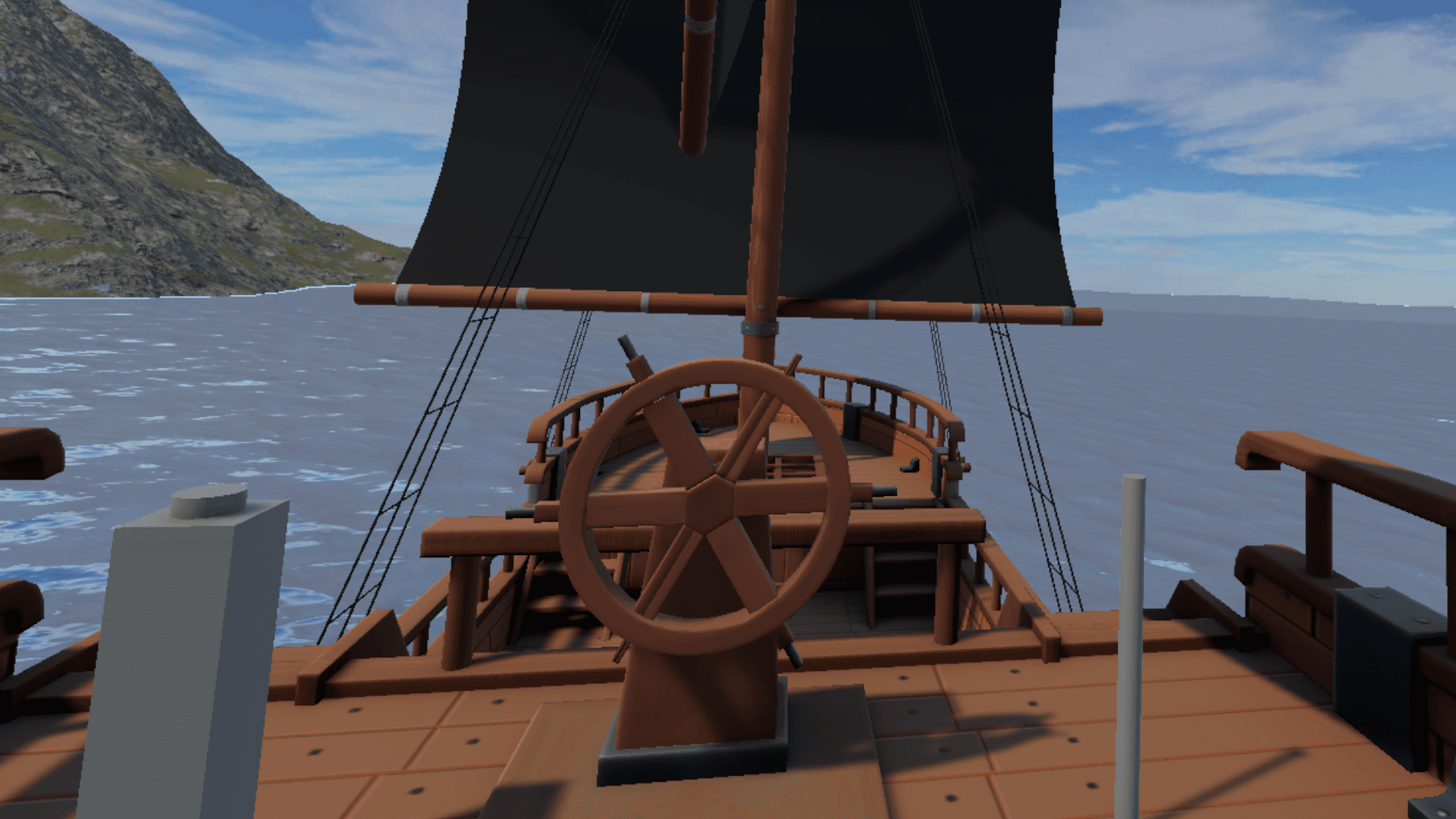
Pirates of Central Europe is a multiplayer arcade naval battler built in Unity. You captain a cannon-armed ship in fast, physics-driven broadside duels — no simulation-grade sailing, just the satisfying arc of a cannonball and the scramble to reload before the other ship comes about. The design leans deliberately arcade: short matches, readable stakes, and a skill ceiling that lives in positioning and timing rather than menus.
02The Hard Part: One Match, Two Platforms
The engineering challenge that shaped everything was cross-platform multiplayer. The same networked match runs between VR headset players and Windows desktop players, sharing one authoritative game state. Ships, projectiles, and hits all have to resolve identically no matter what device a captain is on.
What differs is input. VR players get motion-based controls — physically grabbing, aiming, and reloading cannons with their hands — while desktop players get a mouse-and-keyboard scheme mapped onto the same underlying actions. Decoupling the intent (fire this cannon at this angle) from the input (a tracked controller vs. a mouse drag) was what let both clients speak the same language over the wire.
Motion-driven VR
Grab, aim, and reload cannons with tracked hands — the cockpit is your ship's deck.
Desktop parity
Full mouse-and-keyboard play on Windows, in the same matches as VR captains.
Arcade combat
Physics-driven broadside duels — positioning and timing over simulation.
Shared game state
One authoritative, networked match; identical resolution across platforms.
03What I Took Away
Cross-platform VR/desktop play forces you to be honest about your abstractions early. The moment you assume a controller pose or a headset-relative camera in your gameplay code, desktop breaks — and vice versa. Building the shared action layer first, then layering platform-specific input on top, kept both versions of the game in lockstep as features grew.
Pirates of Central Europe · Cross-platform multiplayer VR · Unity
Enjoyed this post? Check out what else I've been building.
See my other posts